
By Tom Davies
Indiana Capital Chronicle
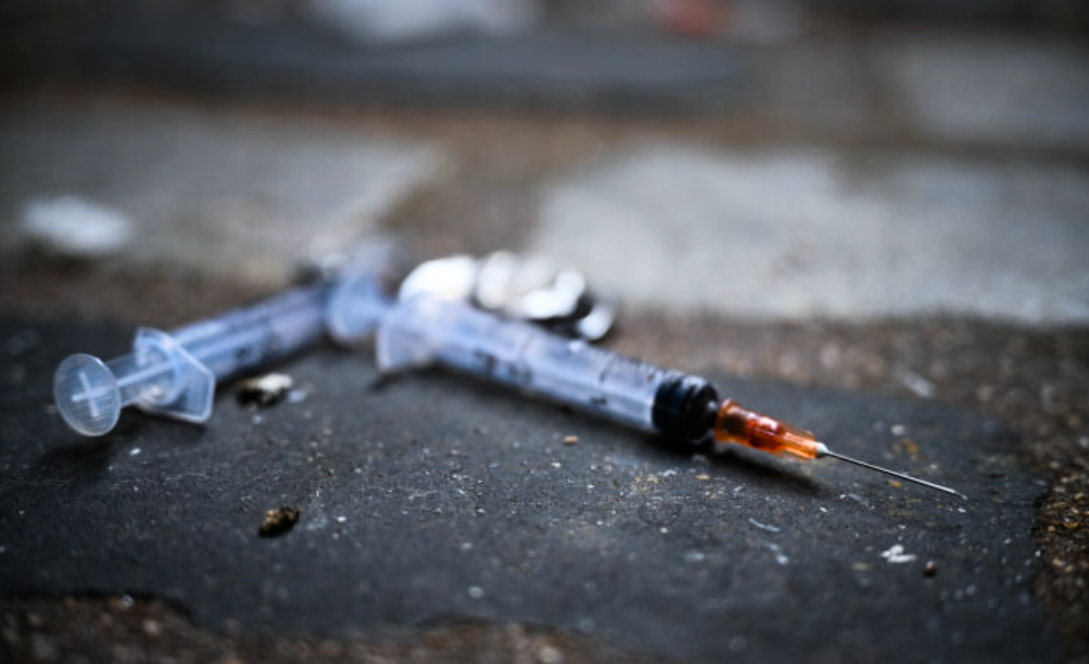
For Indiana’s syringe exchange programs to survive, they might face new restrictions that public health advocates say will undercut efforts to help intravenous drug abusers kick their addictions.
The programs face a renewal deadline this summer after first being authorized under then-Gov. Mike Pence in 2015 following an HIV outbreak in rural southern Indiana’s Scott County that was spread through needle sharing and infected around 200 people.
Six of the state’s 92 counties now have such programs providing sterile needles, disease testing and offers of addiction counseling to addicts, but they face persistent criticism of enabling illegal drug use and the spreading of health dangers from discarded needles.
House Public Health Committee Chair Rep. Brad Barrett, R-Richmond, was clear during a Tuesday meeting that tighter restrictions were needed in order for the Republican-dominated House to approve a bill allowing the county-run programs to continue past June 30.
Restrictions inserted by the committee into Senate Bill 91 would require a participant to present identification proving residency in the exchange program’s region and limit the program operators to providing one sterile needle for each used one handed in.
An amendment also shortened the Senate-endorsed bill’s extension of the programs from 10 years to two years, so its authorization would expire again in summer 2028.
“This is a realistic approach of where we are,” said Barrett, who is a retired general surgeon. “To make some adjustments, gauge the impact of that but move forward, with the alternative being this falling off the statute.”
Fourteen supporters of the syringe exchange programs — including doctors from Scott County, drug treatment center leaders and the Indiana State Medical Association’s president — largely testified against the additional restrictions as undermining their effectiveness.
The only testimony supporting the changes came from the Indiana Prosecuting Attorneys Council.
Criticism surrounding exchanges
A criticism of the programs that’s frequently raised is that they provide more sterile needles to participants than are collected in return. The state health department reported an 88% return rate in 2023, but that still meant more than 200,000 needles distributed than collected.
Chris Naylor of the prosecutors’ council argued that discarded needles in many communities pose a danger to the public.
“We support all sorts of drug treatment programs throughout the state,” Naylor said. “However, it should not be at the expense of public safety. That’s the concern with some of these programs when we are injecting so many more needles into these communities.”
Supporters note that the needles are often turned in via sharps containers and estimates are made based on weight to lessen the risk of counting used needles by staff.
Similar arguments were made when the Senate debated the bill last month. It cleared the Senate in a 33-13 vote, with all the opposition coming from among the 40 Republican senators.
The issue divided Republican members of the House committee on Monday before they voted 9-4 to advance the bill to the full House for debate.
Rep. Cindy Ledbetter, R-Newburgh, said she worried about putting a roadblock on the needle exchange program when the state has seen a big jump in babies born with congenital syphilis, which is spread through IV drug use.
“I’m just struggling with the fact that somebody wouldn’t be able to have access to a clean needle because they were afraid they’d have to show ID,” said Ledbetter, who is a nurse practitioner.
Rep. Matt Hostettler, R-Patoka, raised the objections that the programs are enabling drug abuse. He said he supported the changes toward a “one-for-one exchange, so it’s actually an exchange and not a distribution program.”
“We normalize not having to die”
Program advocates argued against the tighter restrictions, saying they would damage efforts to start people on the path to kicking their drug habits.
Charles Neal, lead pastor of Brookside Community Church on the east side of Indianapolis, told legislators that an RV from an exchange program parks near his church each week.
“It is a very discreet district type of situation where people come, where they can have their human dignity, worth and their value,” said Neal, who described himself as a 21-year recovering drug addict and alcoholic.
Kylee Kimbrough, board president of the Indiana Recovery Alliance in Bloomington, said she found help quitting her drug abuse after she started visiting the alliance’s syringe exchange. She was among those testifying about the importance of such programs in keeping addicts from becoming infected with dangerous diseases.
“We don’t enable drug use,” Kimbrough told the committee. “We enable surviving drug use. We don’t normalize addiction, we normalize not having to die because of it.”
Supporters cited research they said showed needle exchange participants were much more likely to stop their drug use than those who did not encounter such programs. They also pointed to the high costs for HIV treatments and liver transplants stemming from hepatitis C cases that often fall onto Medicaid programs.
Dr. Shane Avery, a family physician from Scott County, said he supported the needle exchange creation there during the HIV outbreak and that it was effective in stemming the spread of HIV and hepatitis C and helping get addicts into recovery services.
“Syringe exchange programs offer a pathway to redemption for individuals who inject drugs,” Avery said. “It is the single most powerful tool, as odd as it seems.”
Bill author Sen. Mike Crider, R-Greenfield, said he did not want the additional restrictions added to the needle exchanges, urging committee members to remember that each statistic they hear “represents a human, a person.”
Crider called the legislation the most difficult issue he’s dealt with in his 14 years as a senator, following his career as a Department of Natural Resources law enforcement officer and as security chief at Hancock Regional Hospital.
“If you’re going to operate an effective exchange program, you want the lowest barriers to entry into the program you possibly can have,” Crider said. “My concern is, if we limit this too far, if we do have another outbreak, then we’re not going to be able to respond effectively to that outbreak.”
* * *
The Indiana Capital Chronicle is an independent, nonprofit news organization dedicated to giving Hoosiers a comprehensive look inside state government, policy and elections. The site combines daily coverage with in-depth scrutiny, political awareness and insightful commentary.