
By Dan Spalding
News Now Warsaw
WARSAW — Kosciusko County Sheriff’s Office highlighted its relatively new jail program, the Kosciusko Community Recovery Program, at a meeting Monday night at the Zimmer Biomet Center Lake Pavilion in Warsaw.
The program works with inmates who will soon be released to assist in the transition and address a wide variety of needs that are traditionally overlooked, with the hope that they don’t end up back in jail.
KCRP Resource Navigator Shanna Wallen said that since July of 2024, 144 inmates who have received some sort of service have been released from jail.
Many of their needs often vary greatly.
“It could be clothing, it could be housing, it could be transportation, it could be insurance. Everybody’s needs are different,” Wallen said.
Of those inmates, 105 have been fully released from custody by the Indiana Department of Correction.
Thirty-nine are still in the system. Another 12 ended up back in jail.
“In every single one of those cases, their return was directly connected to a substance relapse,” Wallen said.
KCRP was proposed nearly two years ago by Sheriff Jim Smith, who chose not to use a state-supported program and instead opted to create his own with KCRP, which would be jail-based and rely heavily on community support and grant money.
KCRP is one of many local initiatives and programs overseen by the county or working closely with the county to help inmates in their return to freedom.
Smith is quick to admit that the court system and society have changed and led to a rethinking of incarceration.
If the program continues to make a difference, it could help keep down the jail population and reduce the number of people who repeatedly find themselves back in jail.
“If we don’t give them an opportunity, they’re going to go back to what they know, which, oh by the way, led them there this last time … and the time before that and the time before that,” Smith said.
Wallen agrees wholeheartedly.
“When most people think of jail, they think of punishment, but history has taught us that punishment alone is not improving behavior or reducing recidivism.”
While the results only span 15 months, Wallen thinks they’re headed in the right direction.
“Through KCRP, we are proving that jail can be a place for change, a place where people begin to heal, start recovery and prepare for a new way of life outside those doors,” Wallenn said.
The meeting on Monday was the second in the past year, highlighting the programs, many of which rely on partnerships in the community.
Last year, the program included a roundtable that included the judicial and prosecutorial perspectives.
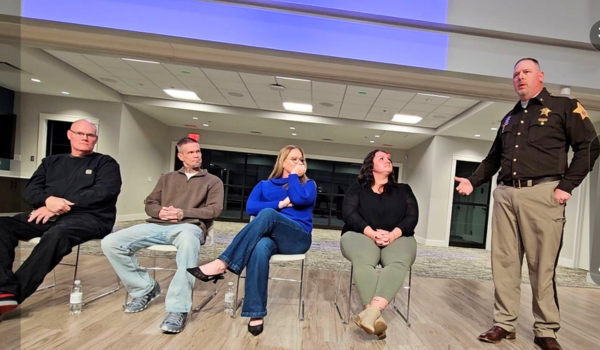
Monday’s community meeting was highlighted by another roundtable that included two former inmates who have benefited from the collection of services made available in the county, and two professionals who talked who work closely with those formerly incarcerated about life after prison.
Both former inmates talked about how the programs have provided important support toward a life outside of jail.
Those preparing for life after prison are often overwhelmed by the hurdles they face upon release, while also facing the ongoing temptations of drug use.
The greatest challenges for many leaving prison, Wallen said, continue to be the need for transportation, employment and housing.
Smith said community support can further the program.
“The more we get the word out, the more resources will come our way, hopefully, more employers who are out there will consider maybe taking a chance on some of these folks as they get out,” Smith said.