By Dan Spalding
News Now Warsaw
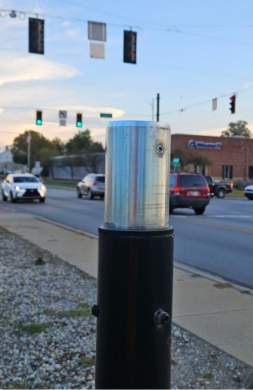
WARSAW — Kosciusko County Prosecutor Brad Voelz is being lauded for moving quickly to take down Flock Cameras across the county after county council voted unanimously on to defund the devices.
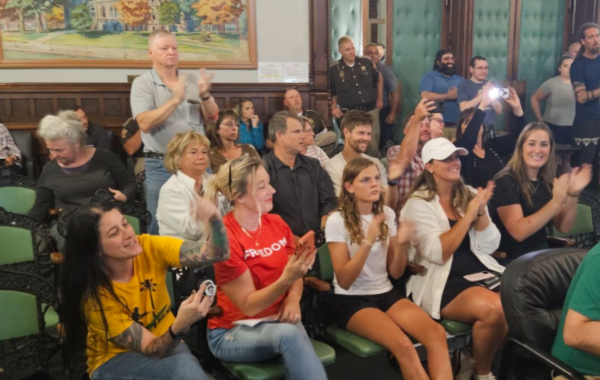
The prosecutor’s decision on Friday comes after nearly 200 people showed up at Thursday night’s council meeting upset with the use of license plate reader technology in more than 30 locations in the county.
“He realizes that it’s not what the people want and he’s willing to make it right,” said County Council member Rachael Rhoades, who talked about it on Sunday.
Also applauding the move was Monica Boyer, a Republican and an outspoken critic of Flock Cameras.
Boyer created a Kosciusko County DOGE page on Facebook earlier this summer to highlight local government spending and used it to lobby against the county’s use of Flock Cameras.
“He didn’t have to move this quickly, but he did, and I’m thankful for that,” Boyer said.
Thursday’s vote was the culmination of growing concerns over the automated license plate readers, which have fallen out of favor in Allen, Starke and Noble counties in recent weeks.
On Monday night, Marshall County Council voted 4-3 to discontinue funding for six cameras opeated by the county.
News Now Warsaw reached out to Boyer, Rhoades and Don Weisehan, a former deputy who is a candidate for county commissioner (and poised to be elected in the Nov. 3 general election), seeking comment on the recent decisions,
All three said they were proud of the public’s response to the issue.
Many of the cameras in Kosciusko County have already been removed.
Even though the devices are being removed, Boyer urged people to attend the county commissioners’ Sept. 22 meeting to ensure they support ending the contract with Flock Safety.
“We’ll be at the commissioners’ meeting — we have to formally get rid of the contract,”
Boyer said.
The upcoming second vote is necessary because, while the council holds the purse strings, the commissioners are responsible for the contract.
Opposition to Flock Cameras brought together a coalition of Republicans, Democrats and Libertarians.
Among those calling for change were the Kosciusko County Libertarian chair Cassie Rolon, Democrat Travis McConnell and Republican Chris Plack.
Some of those in the “tripartisan” alliance attended a county budget session in August and raised concerns afterward. Several county council members sought to delay a funding vote, which led to last week’s meeting.
Boyer said she especially enjoyed working with McConnell in the lead-up to Thursday’s meeting as they looked into where the funding for cameras was located.
“Working with Travis was fun,” Boyer said. “On a personal side — it made me grow as a person, being able to work with him and just listen, you know, to perspectives. And I discovered we’re not that much different.”
She suggested that operating from each other’s entrenched positions often turns out to be a detriment
“There are things we will never agree on — but there is a lot of stuff we agree on — and I think we could find world peace if we just turned off the news,” Boyer said.
She said she thinks the Kosciusko County DOGE page helped drive conversation concerning the cameras.
All three also stressed that they remain strong supporters of police even though they stood up to a practice they said violates personal rights.
Rhoades said the bigger looming concern is how the technology will evolve.
“It’s not the decisions that are being made right now as much as the decisions or capabilities of software and surveillance cameras. That’s coming in the future — the very soon future — with AI and all of its developments,” Rhoades said.
Wiesehan, on Facebook, posted that he’s disappointed that the upcoming commissioners meeting will be held at the normal 9 a.m. starttime, and that that frustration has made him even more eager to fulfill his promise to push for at least one of the commissioners’ monthly meetings to be held in the evening.
He said some constituents complained during the primary race that the commissioners only meet in the mornings.
He brought up the issue during the Republican primary and has since talked with the two other county commissioners, Cary Groninger and Sue Ann Mitchell, about the possible change.
“Most of the population works day shifts, so it’s difficult for them to make that,”unless they take time off work.
Rhoades and Boyer both said they support the idea of having at least one commissioner meeting being held at night.
All three also said the county needs to be more flexible in changing meeting locations if officials expect a large public turnout for future big issues.
The Sept. 22 meeting has already been advertized legally, making a location more complicated.
Wiesehan also reflected on how the Flock decision played out.
“Looking at it from the time that the cameras were installed … back in 2023 to present, there’s been a lot of technology changes, and I’m not sure that the public was treated with the transparency of what these things were actually doing,” Wiesehan said. “I think media and social media exposed some things. I was just glad to see the turnout.”